Karen Wilkin
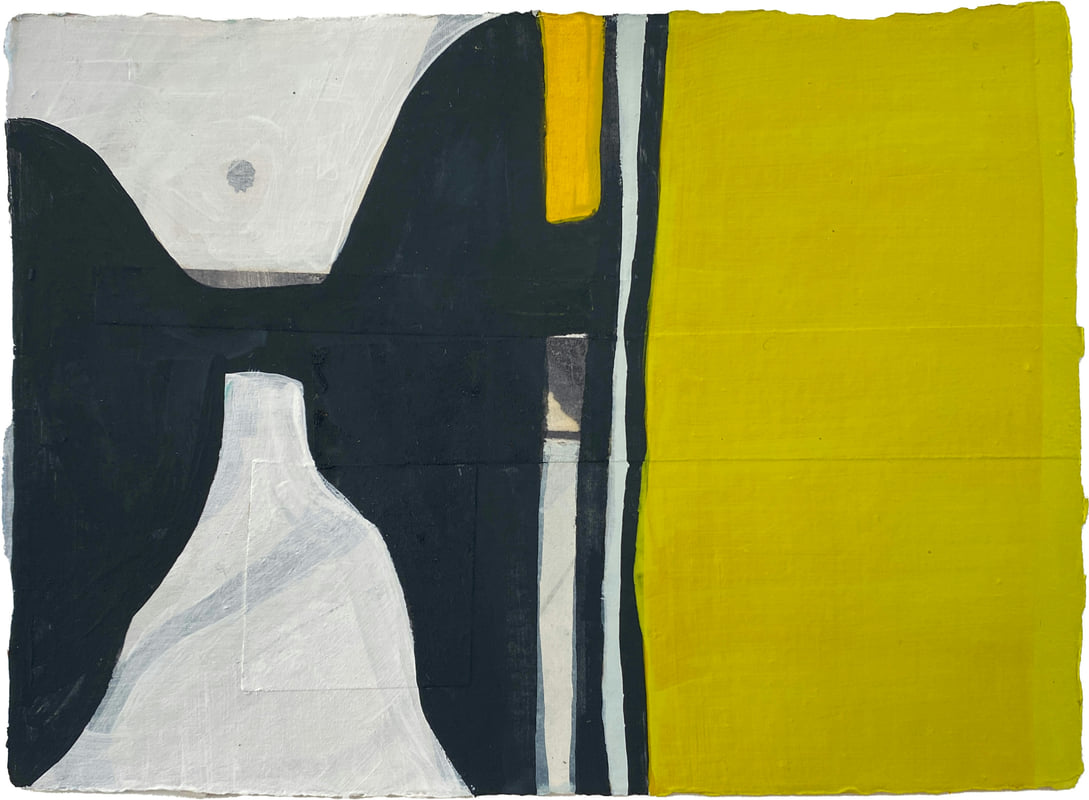
Moser's delicately touching, nested shapes, animated by radiant chroma, resemble nothing specific. Neither does the palette echo landscape colors, yet there's a potent sense of expansive space behind the black “butterfly” shapes and the small, trapped triangles between the parallel lines, perhaps because we are conditioned to associate tapering diagonals with illusionistic distance. On one level, the little painting triggers thoughts about seeing into a fictive world. But these suggestions are contradicted by an intense physicality that returns us to the work as an expressive, abstract object. We are acutely aware of the collaged-on surface variations, the contrast between brushy and suave paint-handling, the elegant, wobbly vertical lines, and the half- buried elements visible between the blunt black triangles. Add chalky, dry surfaces and we start having associations with Renaissance frescos. Then we are captured once again by the interplay of the varied edges— crisp, wavering, emphatic, hand-made—and by luminous, acidic color, tamed by inflected near-white.